Home/Services/Septic Tank Installation & Replacement
Septic Tank Installation & Replacement in Suffolk, VA
We provide septic tank installation and replacement to Suffolk, VA. We plan the tank and drain field around the home, soil and groundwater conditions. We also provide septic repairs 24 hours a day.
Virginia lists minimum tanks of 750 gallons for one or two bedrooms, 900 for three, 1,200 for four and 1,500 for five. Concrete is the code preferred material. Tank only replacement, field only repair and a complete new system are different scopes.
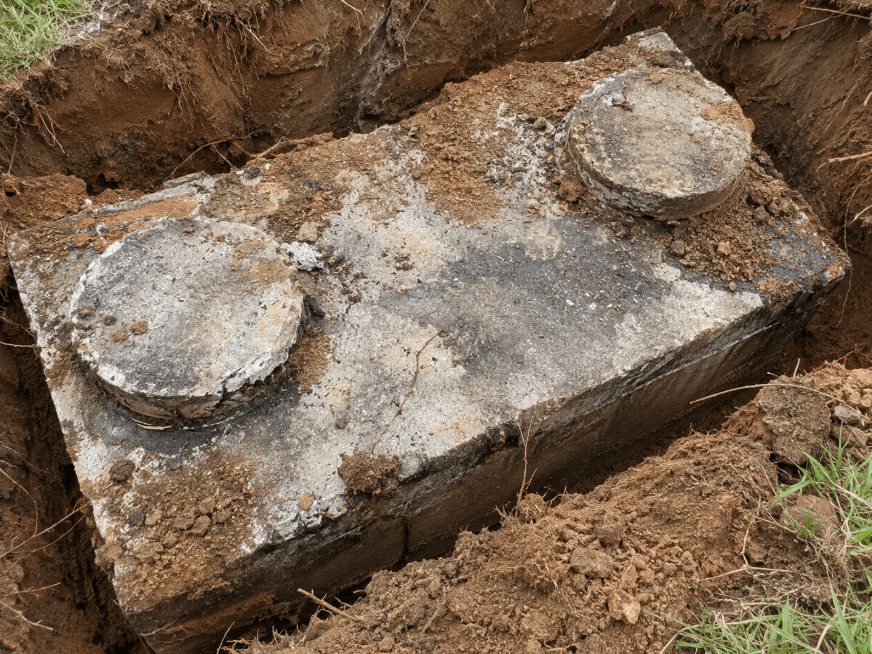
For this property owner, replacement followed a septic inspection that identified cracks in a tank past its expected lifespan and no longer viable.
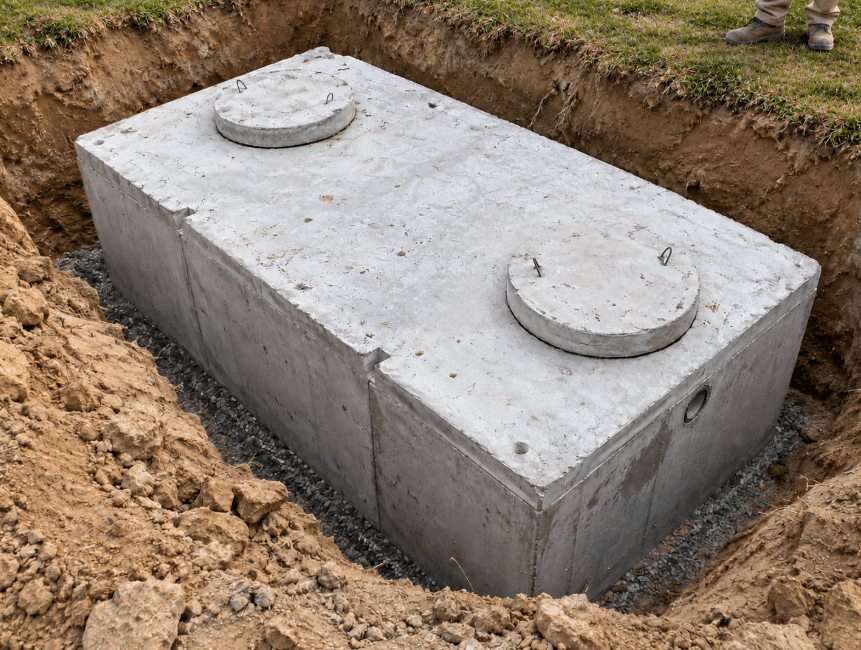
The project included excavating the site, taking out the old tank for disposal and installing the same type of concrete tank at 1,000 gallons of capacity.
Cost
$9,846
Timeline to completion
3 to 5 days, not including permitting
Check Sewer Availability First
Ask Suffolk Public Utilities whether sewer serves the parcel or a connection is required. Rural location, a nearby septic tank or a listing description does not establish approval for a new septic system. Confirm the address before investing in a replacement design.
Start with the Permit and the Property
Request the existing layout and permitted bedroom capacity from Western Tidewater Environmental Health. A licensed onsite soil evaluator or professional engineer supplies the applicable site evaluation and design. Do not buy a tank or start digging before the required approvals are established.
Bedrooms Set the Residential Design Basis
The standard Virginia residential design basis is 150 gallons per day per bedroom. That is 450 gallons per day for three bedrooms and 600 for four. The tank stores liquid; the drain field must accept and treat the design flow. Adding a bedroom can change the permitted demand even if the footprint barely changes.
Concrete, Fiberglass or Polyethylene?
Virginia names concrete as the preferred tank material; other materials are considered case by case. Concrete needs lifting access and a prepared base. Lighter fiberglass or polyethylene tanks need the specific model's approved support, burial and groundwater provisions. Material alone does not determine suitability.
Conventional and Alternative Designs
A conventional system uses a tank and suitable soil treatment area. A site with limiting soil or groundwater may need another approved approach. Virginia does not impose Suffolk wide aerobic treatment for every new home. Alternative systems add operating and maintenance responsibilities.
Compare the Complete Proposal
Ask whether the price covers design, permits, the tank, treatment equipment, drain field, old system abandonment, excavation, electrical work, inspection and yard restoration. Tank only replacement should not be compared with a whole system bid. Confirm the review schedule and do not treat a planning allowance as an approval date.
Start with documented capacity. Virginia's minimum tank table gives 900 gallons for three bedrooms, 1,200 for four and 1,500 for five. Existing tanks may be larger. Bedrooms, daily design flow and storage capacity are related, but they are not interchangeable.
Concrete
Virginia's preferred tank material. Its weight and rigidity suit many installations, but lifting access and a level base matter. Inspect lids, seams, baffles and walls. Even a heavy tank can shift when emptied in saturated ground.
Fiberglass
A lighter composite shell that can simplify handling. Virginia considers other materials case by case. The approved model determines support, backfill and groundwater protection. Check the shell and fittings for damage.
Polyethylene
A lightweight molded plastic tank. Correct burial depth, backfill and any anchoring are essential. Approval and the manufacturer's instructions govern where it can be used. Lightweight does not mean suitable for every site.
Concrete is code preferred; other materials need applicable approval. Compare the model, site requirements and access as well as the material. Tank, drain field and mechanical equipment can have different service lives.
Virginia minimum tank capacities for dwelling units: 12VAC5-610-815
Bedrooms
Standard design flow
Minimum tank capacity
1
150 gallons/day
750 gallons
2
300 gallons/day
750 gallons
3
450 gallons/day
900 gallons
4
600 gallons/day
1,200 gallons
5
750 gallons/day
1,500 gallons
For pumping, the actual installed gallons, compartments and access determine the scope. For installation, the approved site specific plan controls. Do not select equipment from floor area or bathroom count alone.
Practical answers for Suffolk homes and businesses.
What size tank does a three bedroom Suffolk home need?
Virginia's minimum tank table lists 900 gallons for three bedrooms, with a standard design flow of 450 gallons per day. The approved design may use a larger tank or additional components. Check the actual record for an existing system.
Can a conventional system be installed in Suffolk?
Potentially, where the site and approved design allow it. Soil, seasonal groundwater, space, sewer availability and project scope determine the answer. Some properties need an alternative design.
Does a larger house always need a larger tank?
Square footage alone is not the residential sizing rule. A large three bedroom home and a smaller three bedroom home can share the same standard bedroom based design flow. Added bedrooms or a change in use must be reviewed.